Paper-marbling puzzles: precise comb work and calm restoration play
Recreates paper marbling by dragging wooden combs through colored ink lanes to follow illuminated routes and restore damaged leaves in portrait puzzles. Marbletide, from Jieerf Tech, places that mechanic inside a canal-side bindery theme and a campaign of handcrafted stages. The app highlights tactile sounds, an archive that tracks restoration progress, and accessibility toggles. Puzzle players who enjoy pattern recognition and measured, non-competitive sessions will find its deliberate pace and visual focus appealing.
What the game asks you to do and how it feels
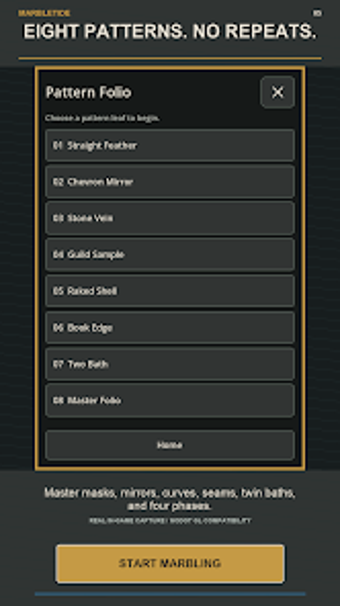
The core loop has players matching a target skeleton by manipulating ink bands with tools such as wooden combs, which you drag along set routes. Levels range from simple linear pulls to multi-phase patterns across eight campaign stages, so the app emphasizes precision and pattern recognition rather than score-chasing. The simulation is deterministic, implemented in the Godot engine, which preserves repeatable outcomes between attempts.
How modes and mechanics shape play sessions
The campaign presents eight distinct levels that step up from single-pass patterns to complex, phased restorations. There are no energy gates or timers, and optional rewarded ads can restore a failed phase or speed rewards, so sessions can pause without mechanical pressure. An archive system records restoration progress and best match records, letting players measure improvement across retries.
Visuals, sound, and interface support careful work
Portrait 2D presentation uses stylized marbling art and animated tool responses to communicate state changes, while tactile sound effects mark every interaction. Accessibility options include Reduce Motion and pattern redundancy through shapes and outlines, which help players who rely on non-color cues. The UI keeps controls on a vertical layout suited to one-handed mobile use.
Difficulty curve, progression, and replay value
Onboarding is gentle: early levels focus on straightforward pulls, later stages require multi-phase planning and precise timing. Progression is measured by recorded best matches rather than unlock trees, so replay value comes from improving accuracy and attempting harder patterns. The deterministic simulation supports deliberate practice because identical inputs produce the same results.
An inviting, contemplative puzzle for pattern-focused players
Marbletide is a patient choice for players who enjoy slow, skillful puzzles and visual craft. Its recorded best-match system and absence of timers suit players who prefer practice over pressure. Expect a narrow, focused experience: those seeking competitive or fast-action puzzles won't find that here. Try it if you want methodical challenges wrapped in a tactile, artistic presentation.